Cattle Wading Pond Clean-Out and Runoff Redirection
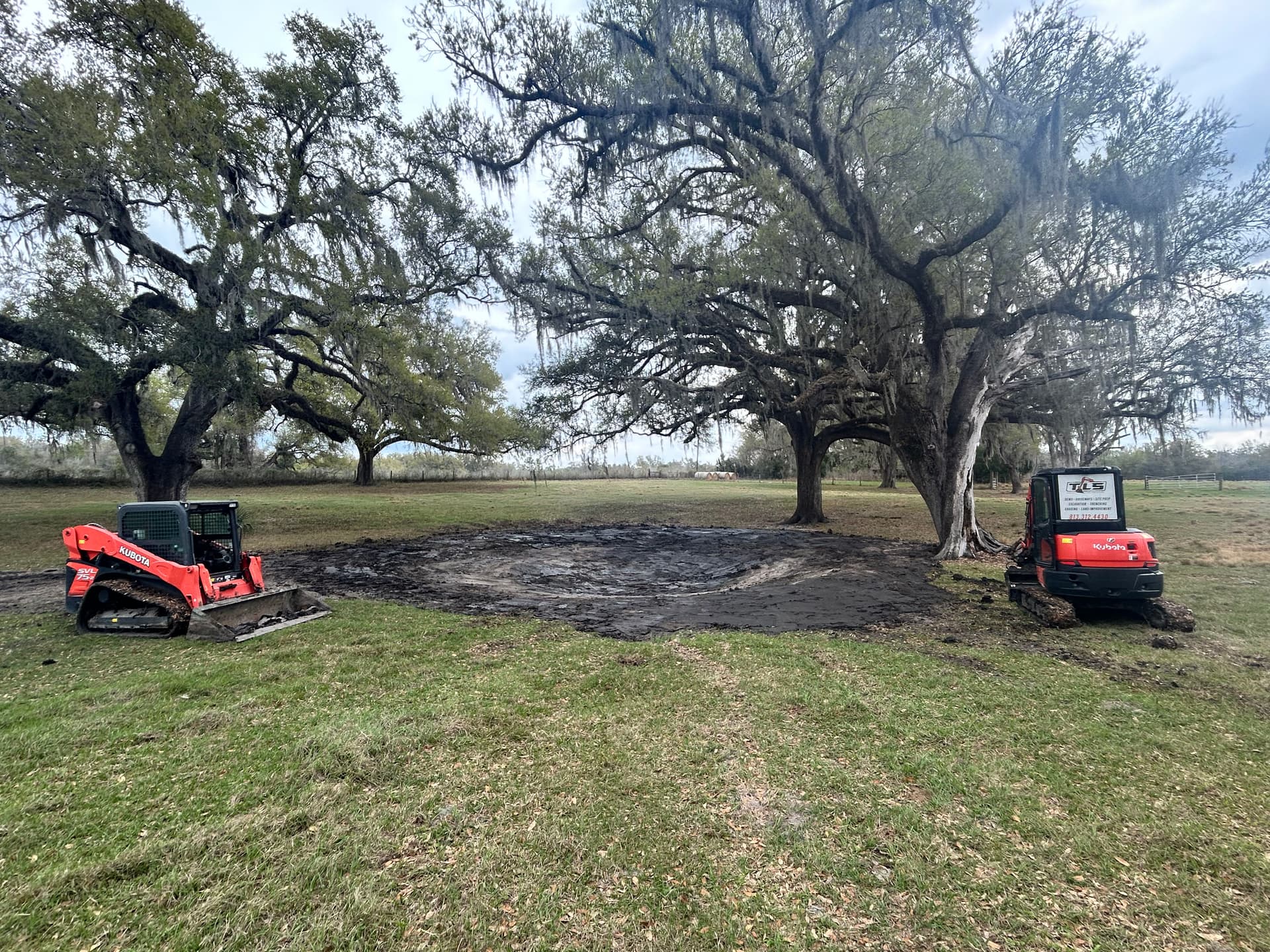
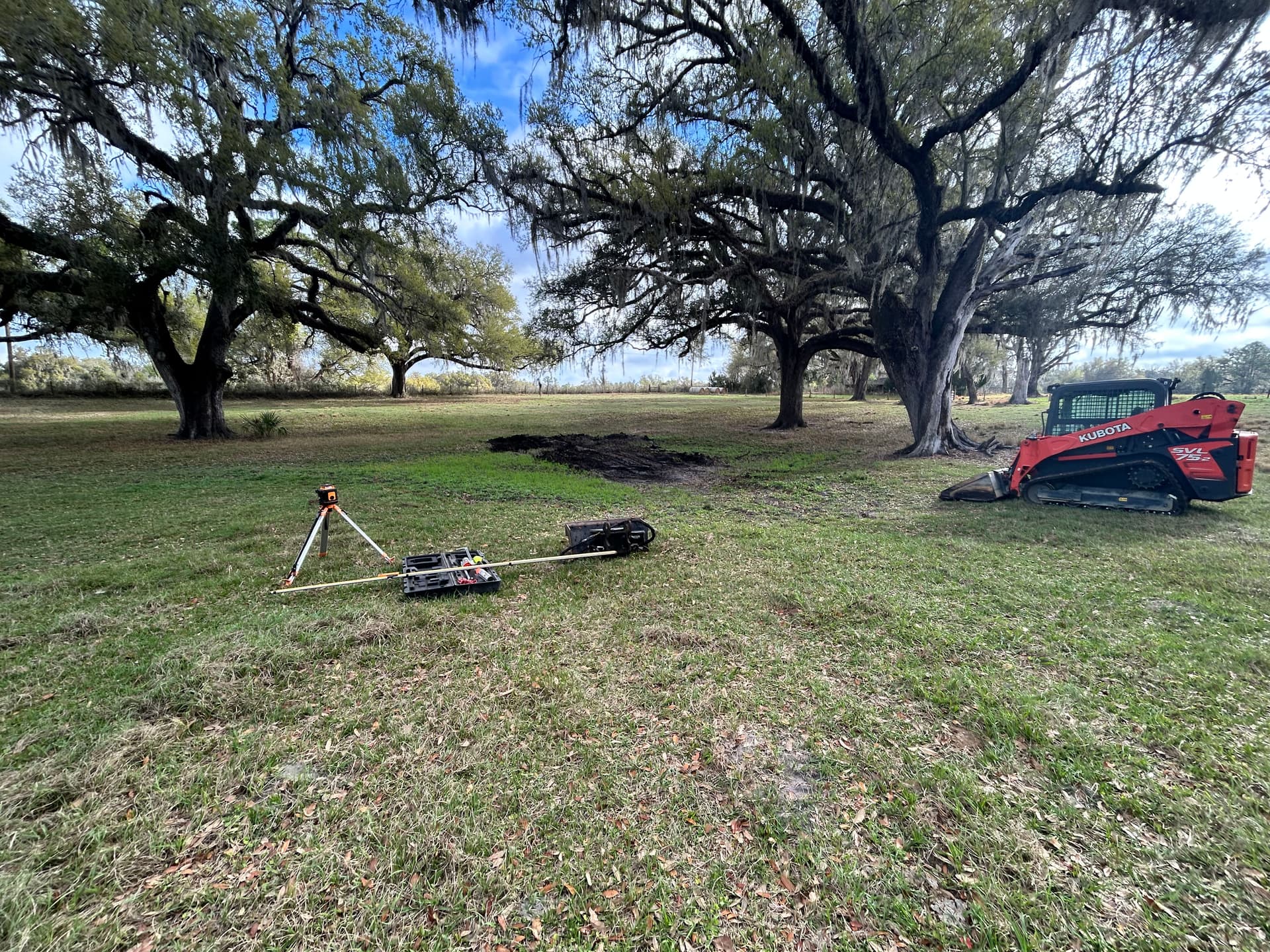
A wading pond that's silted up and full of built-up organics isn't just an eyesore - it's a problem. The water gets shallow, the bottom turns to muck, and what's supposed to be a reliable cool-down spot for cattle becomes something they avoid. That's exactly what we were dealing with on this job.
We came in with our Kubota track loader and mini excavator to dredge out years of accumulated organic material from the pond basin. You can see the dark, heavy layer of decomposed matter that had to come out before we could do anything else. That stuff builds up slowly over time, but its impact on water depth and quality is significant.
Once the clean-out was done, we reshaped the basin and regraded the surrounding area to redirect runoff back toward the pond. That's the part most people overlook. If the land around the pond isn't graded properly, rainwater carries sediment right back in - and you're back to square one faster than you'd think. Getting the drainage right is just as important as the clean-out itself.
We also set up a laser level on-site to dial in our grades before we moved any dirt. That's not something every crew does, but it's how you make sure the water actually flows where it's supposed to go. Guessing on drainage leads to erosion, standing water in the wrong places, and repeat work. We'd rather get it right the first time.
Summer heat is brutal on cattle, and a functional wading pond makes a real difference in how they handle it. When the pond is working like it should - holding water at a good depth and staying clean - livestock use it the way it was meant to be used. That's the goal on every job like this.