Downspout Tie-In and Catch Basin Drainage System Install
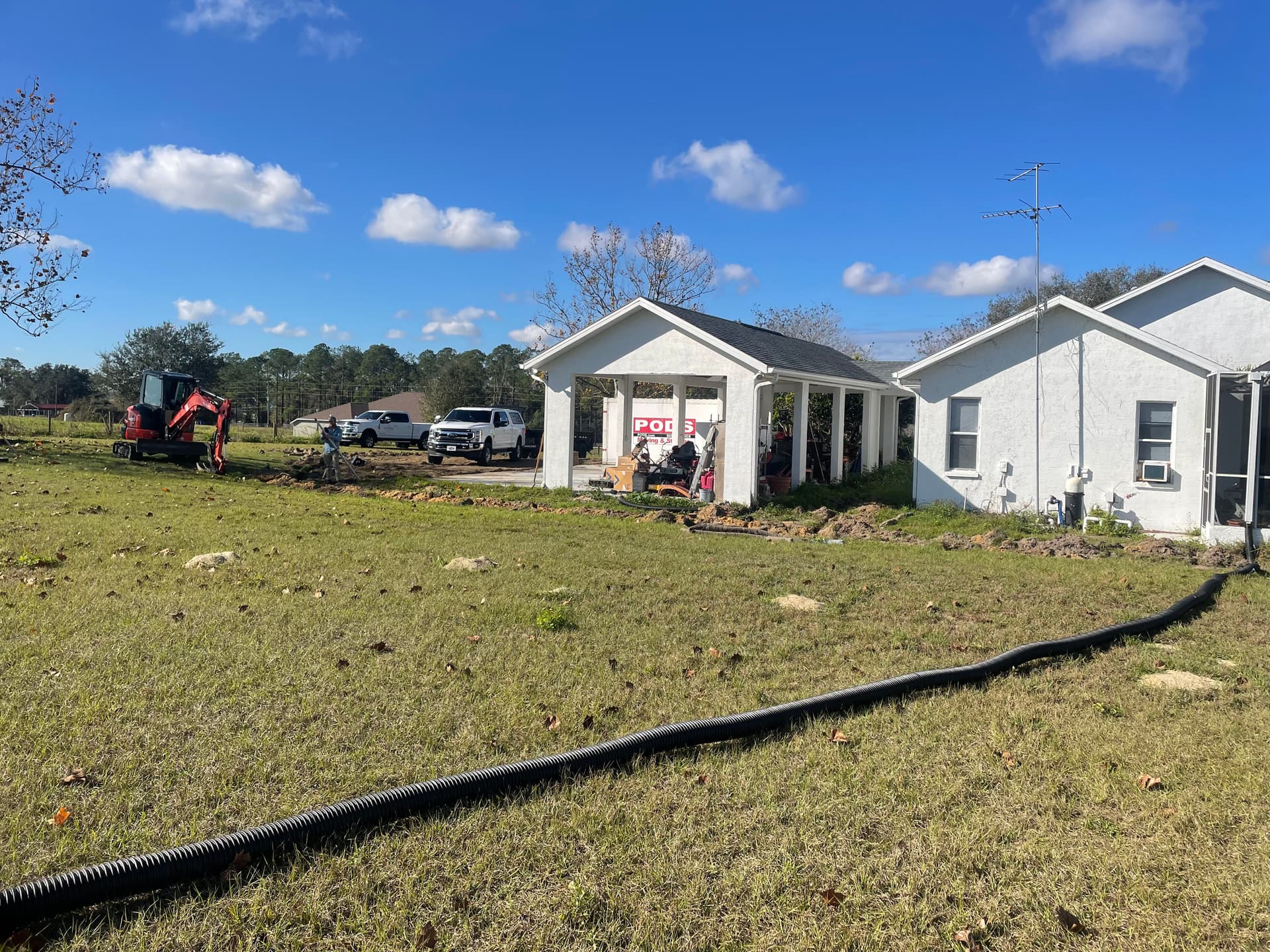
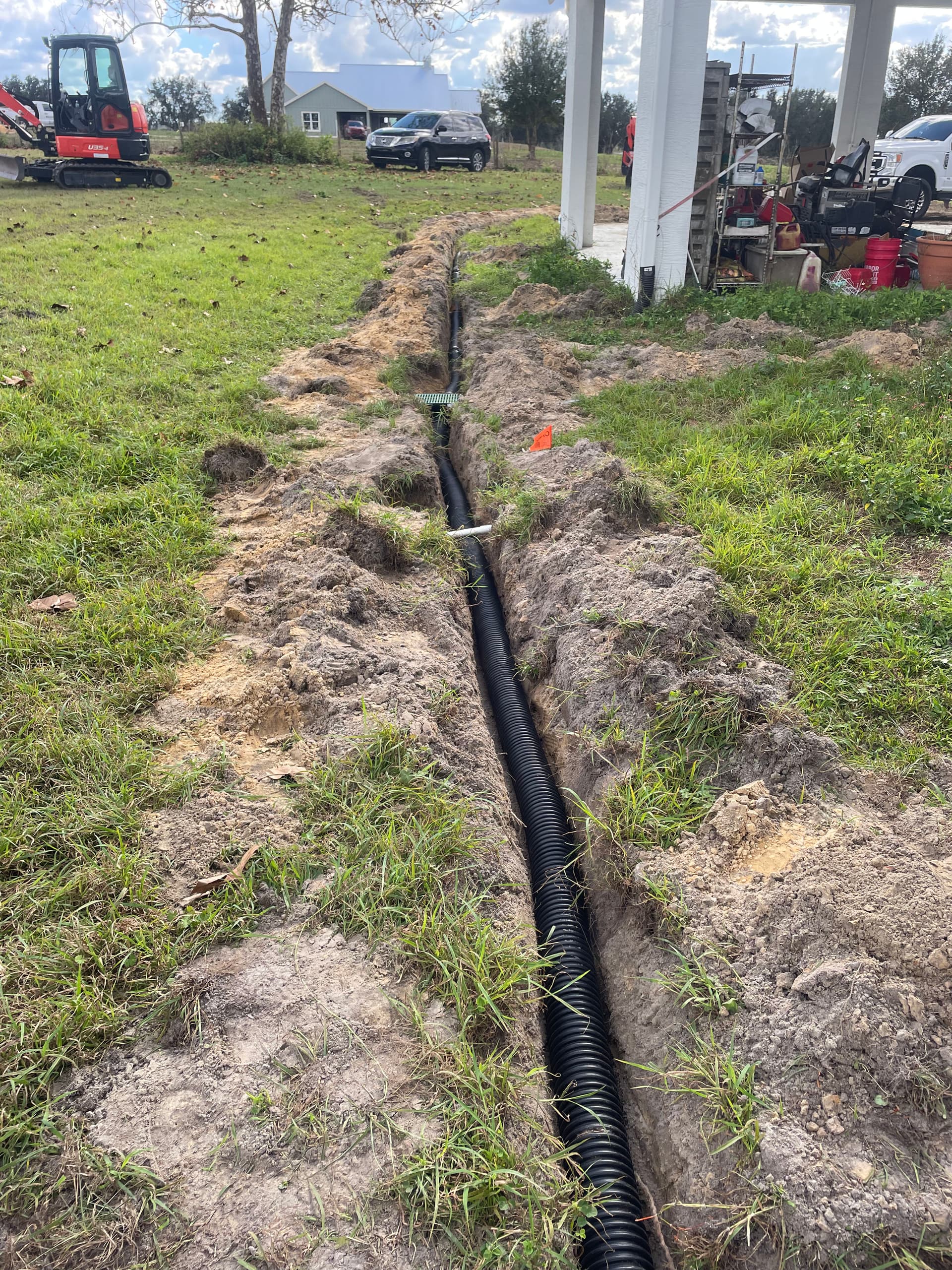
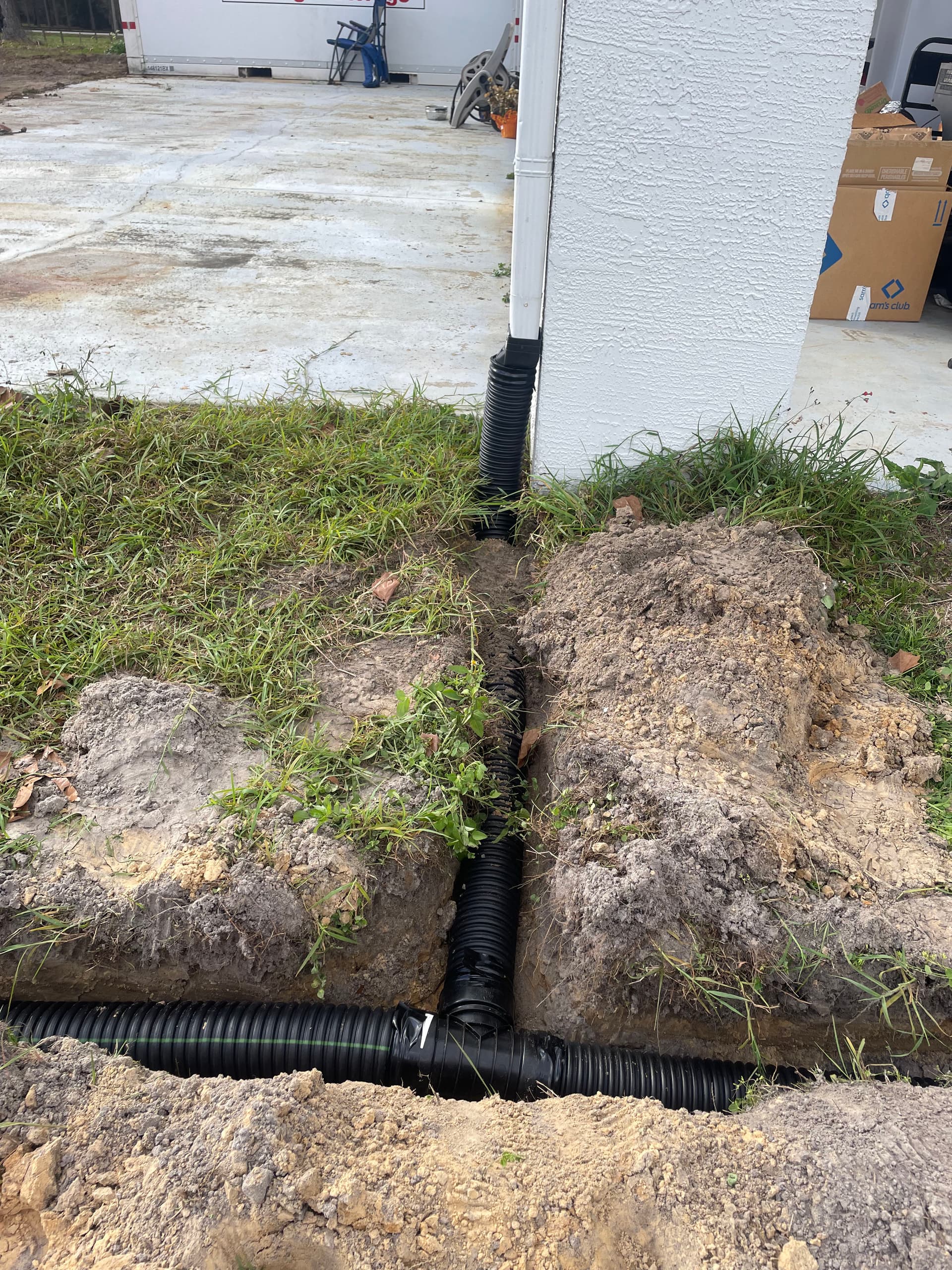
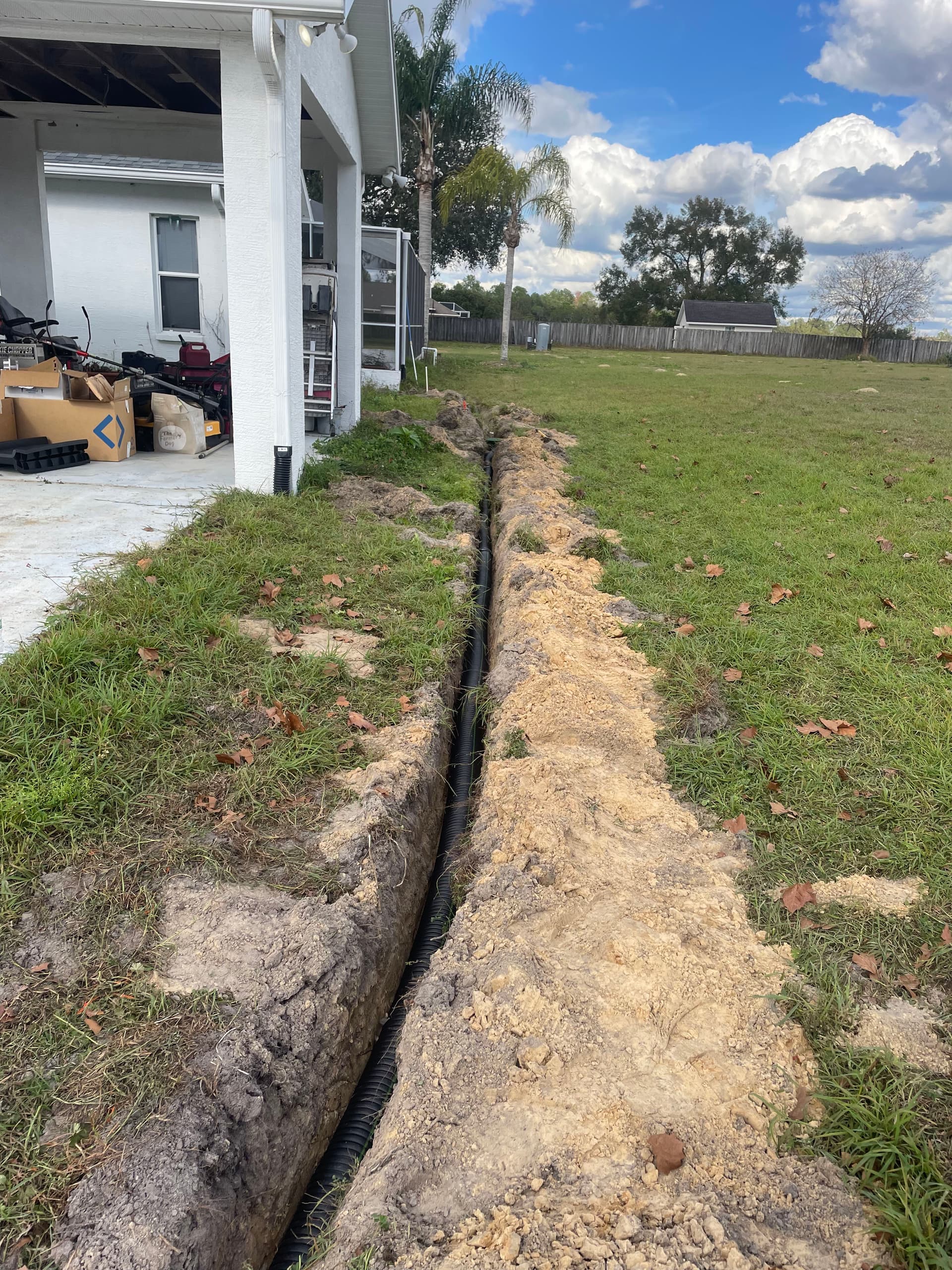
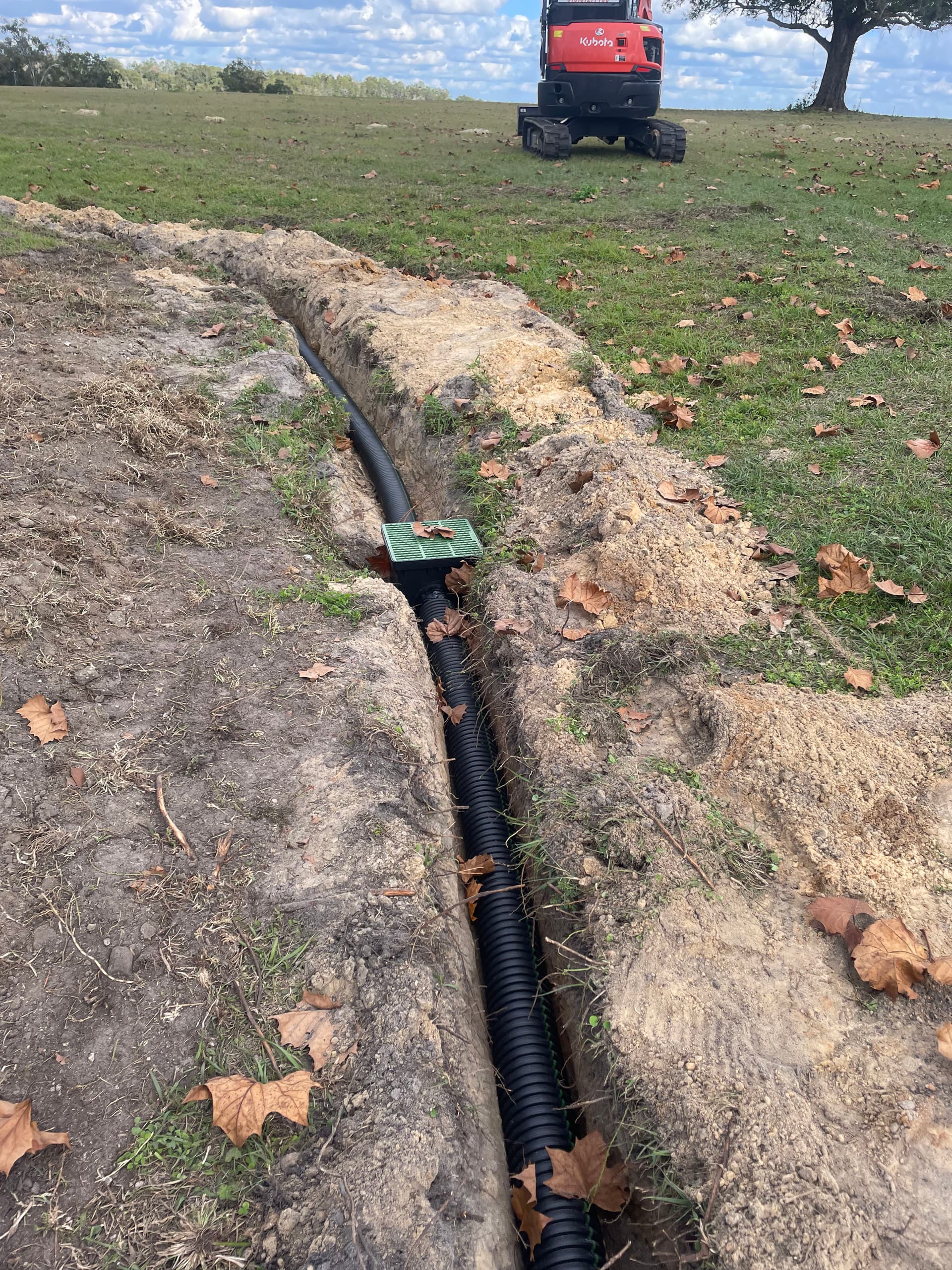
Water pooling around your home is one of those problems that's easy to ignore - until it isn't. What starts as a soggy yard after a hard rain can turn into saturated soil against your foundation, eroded landscaping, and eventually much bigger repair bills. That's exactly the kind of situation we were brought in to fix here.
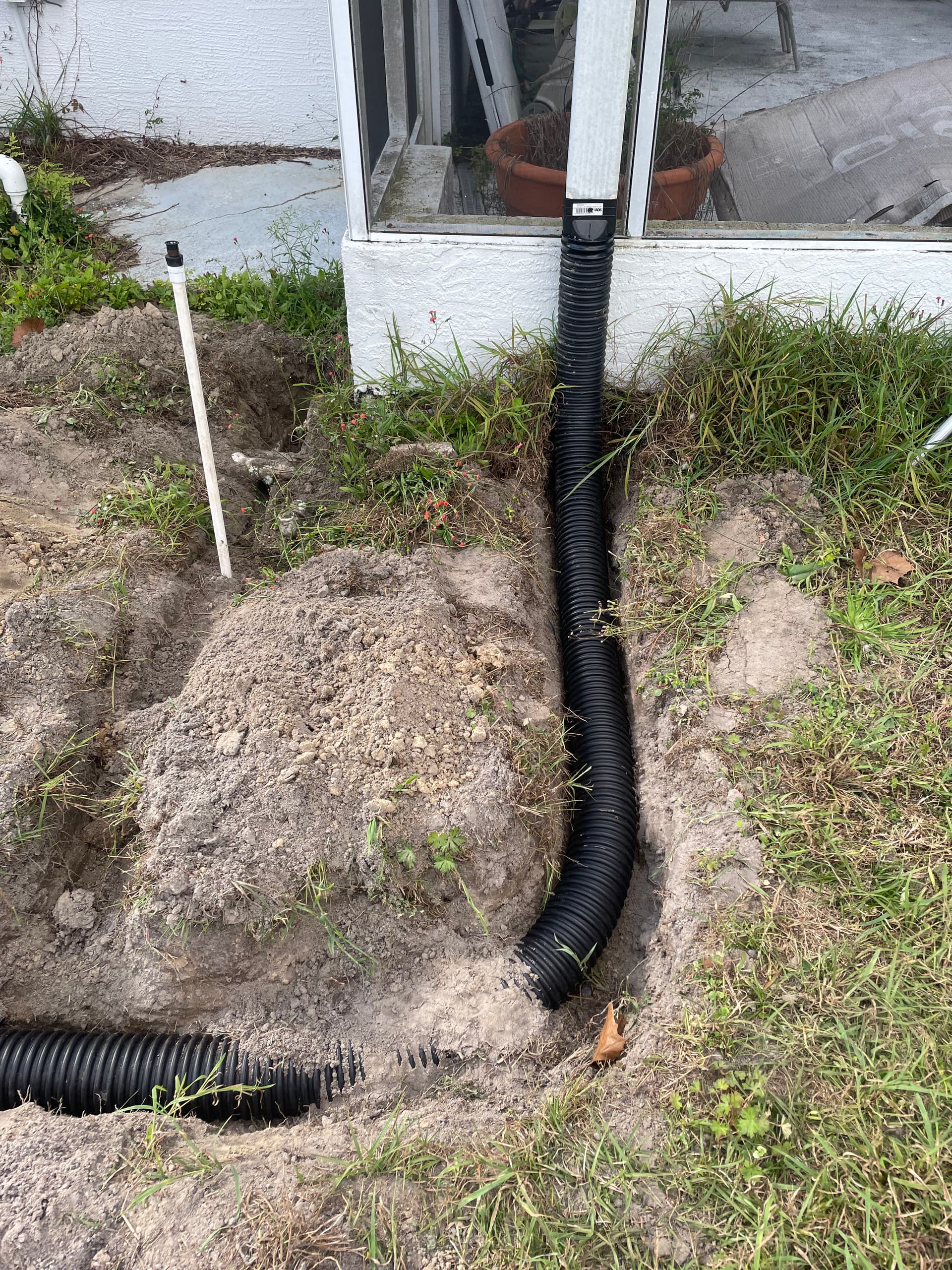
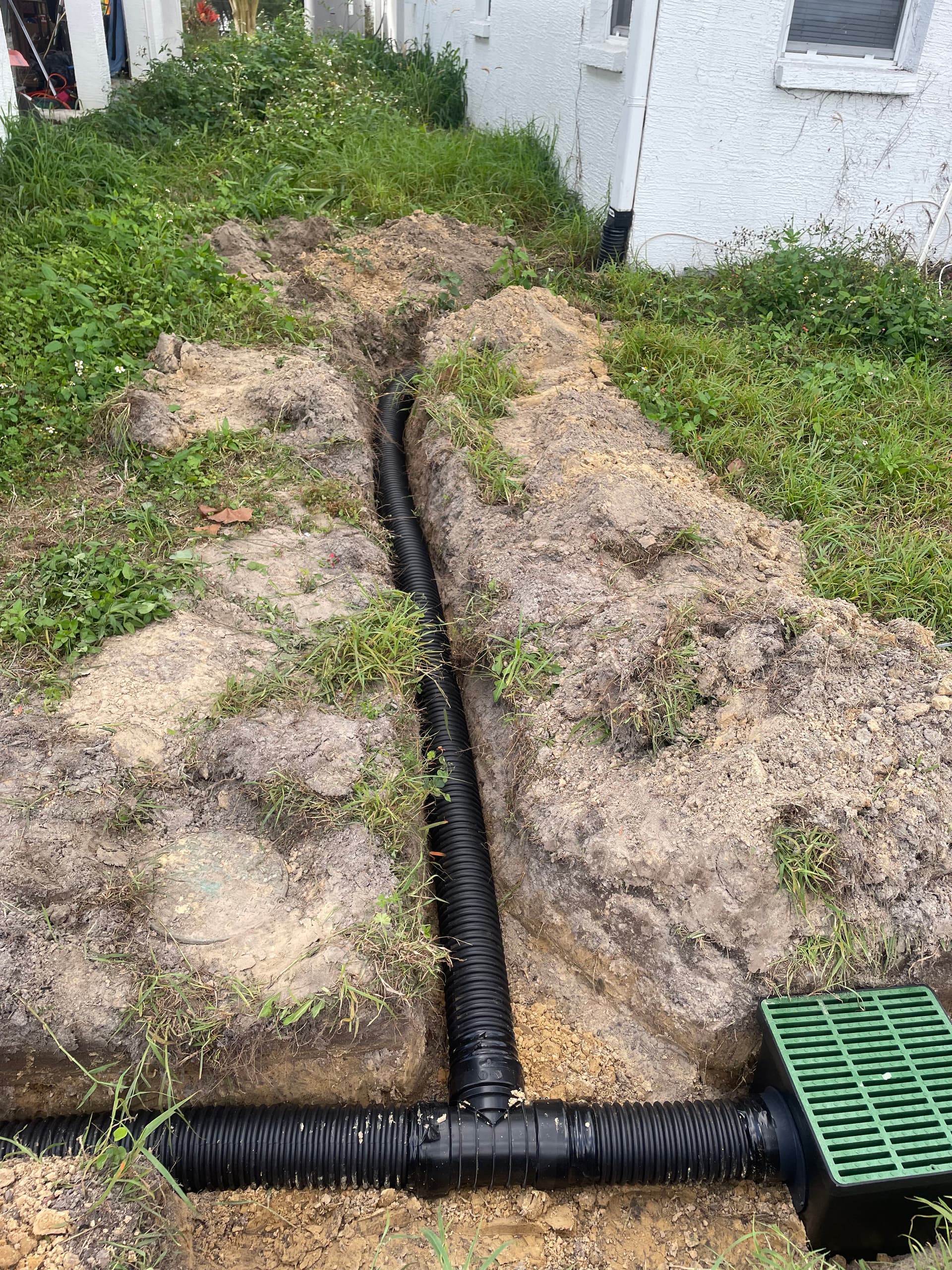
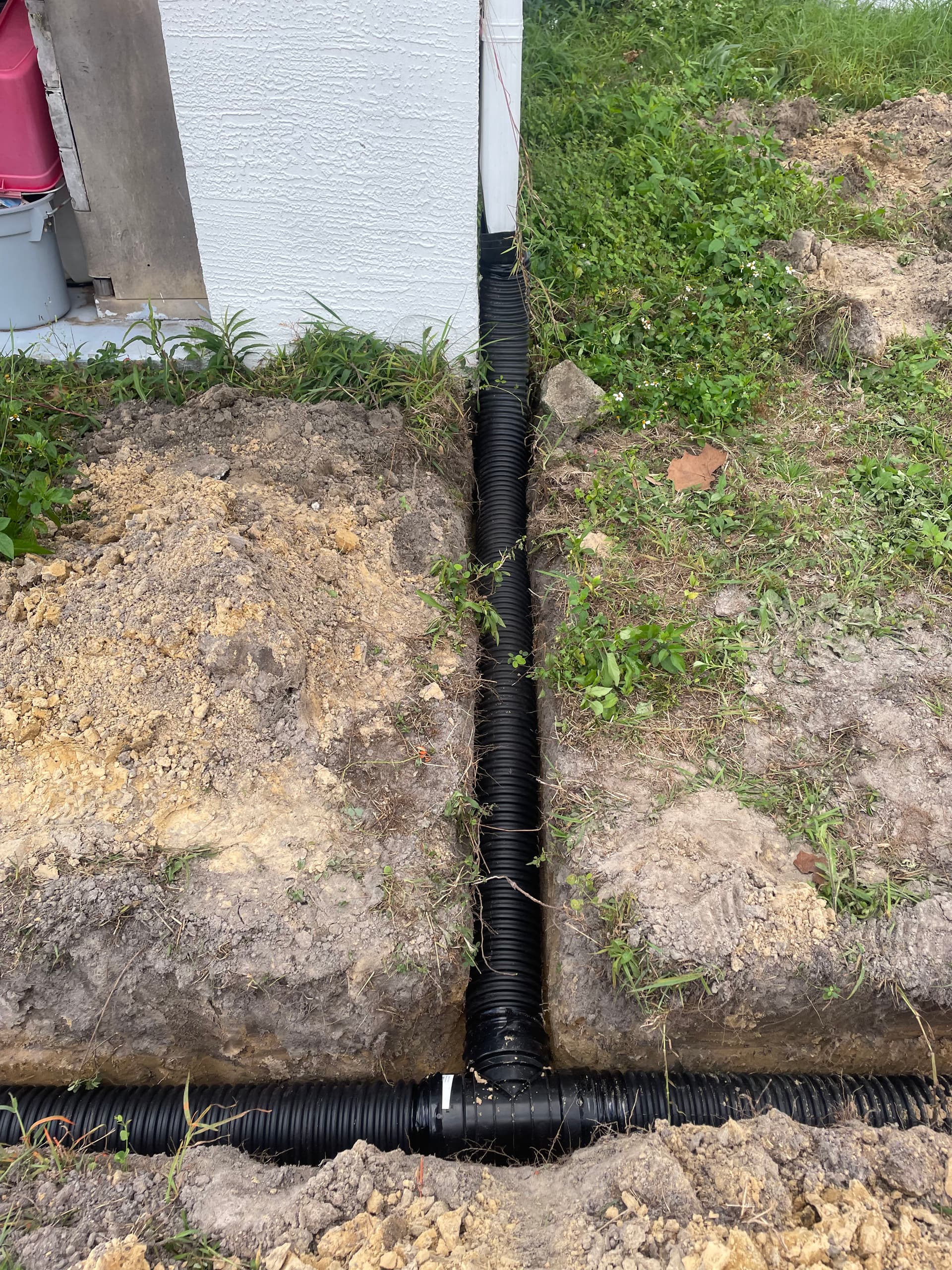
The issue was pretty straightforward: the downspouts were dumping water right at the base of the house with nowhere to go. So we tied them directly into the drainage system, added catch basins to collect surface water, and ran corrugated drain pipe through trenches we cut across the yard. The goal was simple - get that water moving away from the structure and out to a safe discharge point.
Here's what a lot of homeowners don't realize. Downspouts that just splash water onto the ground next to your foundation are doing more damage with every rain. Tying them into an underground pipe system means that water gets captured and moved before it ever has a chance to saturate the soil near your home. Pair that with catch basins in the low spots, and you've got a system that handles both roof runoff and surface water at the same time.
The dirt work side of this is where it all comes together. Getting the right slope in those trenches is critical - too flat and water sits, too steep and you get erosion issues at the outlet. We take that part seriously on every job. A drainage system that's installed with the wrong grade is really just a pipe in the ground.
This is the kind of work that doesn't get a lot of attention once it's buried and the grass grows back. But it's doing a lot of heavy lifting every time it rains. If you've got water sitting against your house or pooling in your yard after a storm, it's worth getting it looked at before the problem compounds.